Sam Simmons · 26 October 2026
Platform-Driven Approaches to Enhancing Search Visibility for Multi-Site Retail Operations
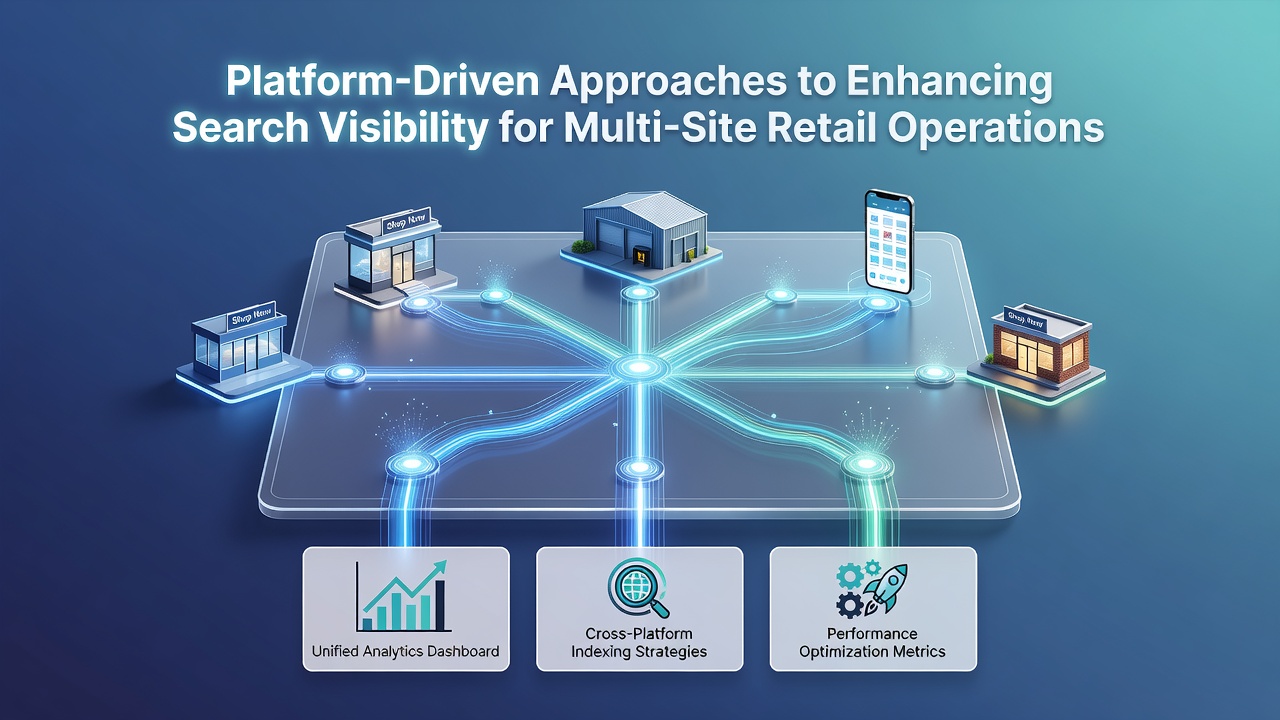
Retail operations spanning dozens of locations rely on unified platforms to coordinate search optimization across domains, subdomains, and localized storefronts, while data synchronization ensures consistent product information reaches search engines without duplication errors. Platforms aggregate crawl reports, keyword performance, and backlink profiles into single interfaces, allowing teams to monitor indexation rates for thousands of pages simultaneously rather than managing isolated site audits.
Centralized Content and Technical Frameworks
Multi-site retailers deploy enterprise platforms that push structured data templates across properties, which reduces schema markup inconsistencies that previously fragmented rich snippet eligibility in search results. These systems connect product information management databases directly to content management layers, so updates to pricing or availability propagate automatically and search engines receive refreshed signals within hours instead of days. Observers note that platforms incorporating API endpoints for inventory feeds help maintain freshness scores, particularly when regional promotions vary by store location.
Data Integration Across Properties
Analytics suites built into these platforms combine server log data with third-party crawl statistics, revealing patterns in how search bots prioritize main domains versus localized versions of retail sites. Research indicates that synchronized hreflang implementations handled through platform rules engines cut down on duplicate content flags, since location-specific pages receive proper geographic targeting signals without manual intervention at each site. Figures from industry reports show that retailers using such integrations experienced measurable lifts in local pack visibility when store pages aligned with centralized category structures.
Automation of On-Page and Technical Adjustments
Platform rules engines scan for broken internal links, missing alt attributes, and canonical conflicts across all connected properties, then queue fixes through automated workflows that developers review before deployment. This approach proves especially useful when seasonal campaigns launch simultaneously across regions, because template-level changes apply uniformly while preserving unique local content elements. Data shows that teams relying on these automation layers spend less time on repetitive audits and more on strategic keyword mapping for emerging product categories.

Integration with external data sources such as European Commission digital market analyses allows platforms to adjust content strategies based on regulatory shifts affecting product labeling and availability disclosures. Meanwhile, connections to academic studies from institutions like the University of Toronto provide benchmarks for measuring how platform-driven site speed optimizations influence dwell time metrics reported by search engines.
Scaling Local Search Signals
Retailers operating across multiple jurisdictions use platform modules that manage business profile data, review aggregation, and location page consistency in one workflow. These tools pull from centralized customer databases to populate store-specific details, which helps maintain accurate NAP citations that support local pack rankings. In October 2026, updates to several major mapping services are expected to place greater weight on real-time inventory indicators, prompting platform providers to expand feed capabilities accordingly.
Monitoring and Reporting Capabilities
Comprehensive dashboards compile ranking distributions, click-through rates, and conversion paths segmented by site cluster, giving operations teams visibility into which platform configurations deliver the strongest returns. Custom alert systems flag sudden drops in indexed pages or spikes in crawl errors before they affect broader visibility, allowing rapid response through the same interface used for content deployment. Evidence from retail case studies demonstrates that organizations adopting these monitoring layers reduced average time-to-resolution for technical SEO issues by measurable margins.
Conclusion
Platform-driven methods continue to reshape how multi-site retail operations approach search visibility by consolidating technical oversight, content distribution, and performance tracking into interconnected systems. As these tools evolve to accommodate new data sources and regulatory requirements, retailers gain clearer pathways for maintaining consistent signals across expanding digital footprints while adapting to localized search behaviors.