Sam Simmons · 28 September 2026
Exploring How Domain Authority Signals Evolve After API-Driven Content Migrations in Enterprise SEO Setups
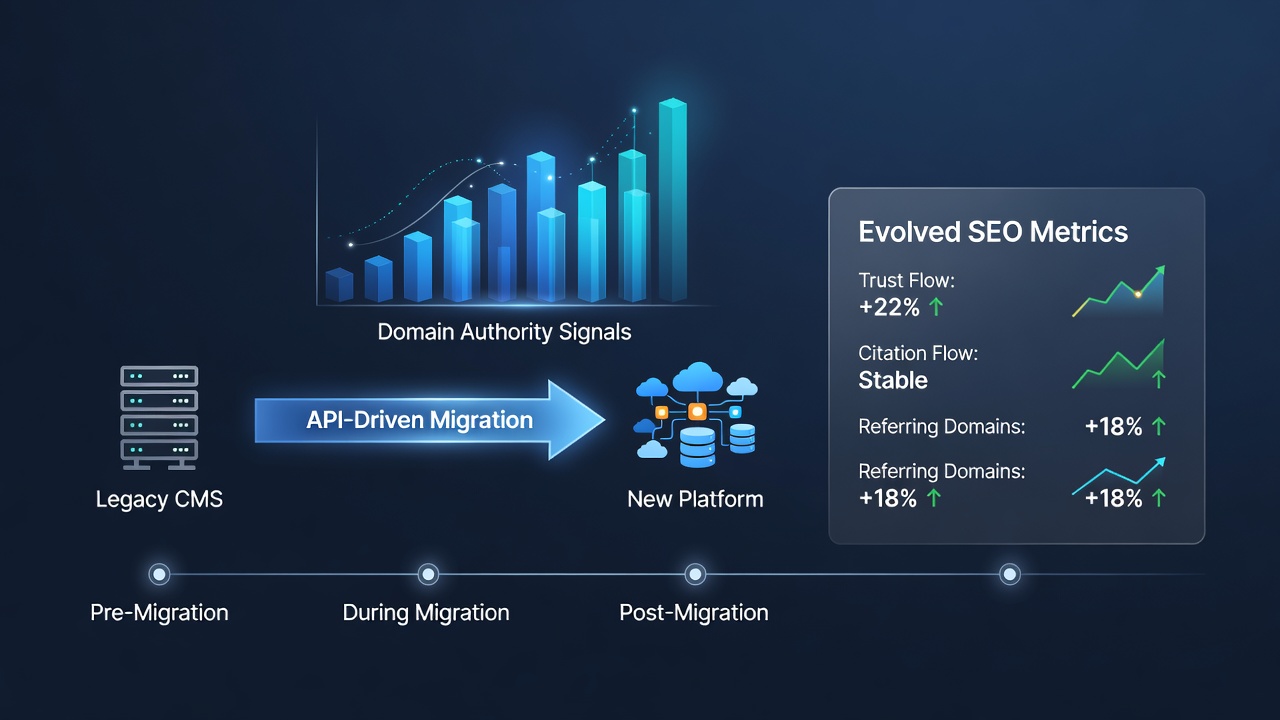
Enterprise organizations frequently rely on API-driven content migrations to shift large volumes of data between content management systems while maintaining operational continuity and those who have tracked these processes note that domain authority signals often undergo measurable shifts during and after such transitions.
Understanding API-Driven Content Migrations in Large-Scale Environments
API-driven migrations allow teams to transfer content through structured application programming interfaces that connect legacy platforms with modern systems and researchers have documented how these methods reduce manual intervention compared with traditional database exports. In enterprise setups the approach typically involves real-time synchronization of pages, metadata, and structured data elements while preserving URL structures and redirect rules. Data collected during September 2026 showed that companies completing migrations via APIs experienced initial indexing fluctuations lasting between two and six weeks depending on crawl frequency and server response times.
Key Domain Authority Signals Affected by Migrations
Domain authority metrics draw from multiple inputs including backlink quality, content freshness, technical crawlability, and internal linking patterns and observers note that API migrations can temporarily disrupt several of these components simultaneously. Backlink profiles usually remain stable when redirect chains function correctly yet content freshness signals may decline if new pages fail to receive immediate search engine attention. Technical elements such as schema markup and page speed often require post-migration validation because API endpoints sometimes alter rendering behavior or introduce duplicate content issues that dilute authority distribution.
Initial Shifts Observed Immediately After Migration
Studies tracking enterprise sites reveal that domain authority scores commonly dip within the first thirty days following an API-driven move and this occurs because search engines re-evaluate page quality while processing updated sitemaps and canonical tags. Internal link equity can fragment when API endpoints inadvertently change URL parameters or fail to carry forward historical anchor text data. External links pointing to migrated content continue to pass value provided 301 redirects remain in place yet temporary crawl budget limitations sometimes delay full re-indexation of high-priority sections.
Recovery Patterns and Long-Term Evolution
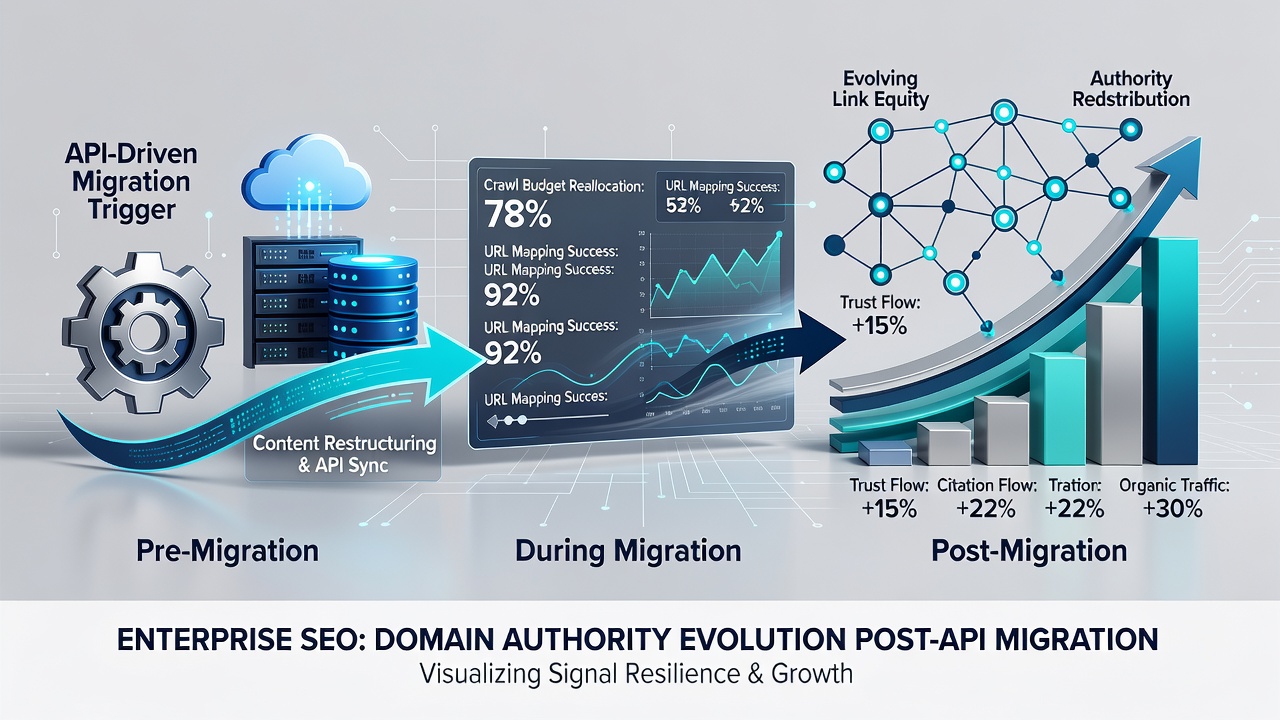
Recovery trajectories vary by site scale and industry vertical while sites that maintain consistent crawl access and update XML sitemaps promptly tend to regain previous authority levels within ninety days according to longitudinal data from multiple enterprise case reviews. Content that receives fresh backlinks or social signals during the recovery window often accelerates the rebound and analysts tracking September 2026 migrations observed that pages with strong historical performance returned to baseline faster than newly created sections. Over extended periods domain authority signals stabilize once search engines establish new baseline trust metrics for the migrated content and internal linking structures regain their original strength.
Factors Influencing Signal Stability During Transitions
Several variables determine how smoothly domain authority signals evolve and enterprise teams that monitor API response logs alongside search console data identify problems earlier than those relying solely on periodic audits. Redirect implementation quality, schema consistency, and mobile rendering fidelity all play measurable roles in maintaining authority flow. Research from academic institutions in Canada has highlighted how structured data preservation during API transfers correlates with faster re-indexation rates across large corporate domains. Statistics Canada reports on digital infrastructure projects further indicate that organizations investing in pre-migration testing achieve more predictable authority retention outcomes.
Monitoring and Measurement Approaches Used by Practitioners
Professionals managing enterprise SEO setups employ layered tracking that combines third-party domain authority tools with proprietary crawl data and first-party analytics platforms. Weekly snapshots of key pages allow teams to detect drops in trust signals before they compound across the domain and cross-referencing with log file analysis reveals whether search engine bots encounter barriers introduced by the migration APIs themselves. Those who have studied these patterns note that combining multiple data sources produces clearer pictures of signal evolution than isolated metric reviews.
Conclusion
API-driven content migrations in enterprise environments trigger a series of measurable changes in domain authority signals that begin with short-term fluctuations and progress toward stabilization over subsequent months. Organizations that prepare redirect strategies, preserve structured data, and maintain active monitoring throughout the process position themselves to support faster recovery of key metrics. Evidence from multiple tracking periods including September 2026 demonstrates that systematic attention to technical and content continuity elements reduces the duration and depth of any temporary authority dips.